Choosing reliable Geogrid Gravel suppliers in 2026 requires more than comparing unit prices. Global buyers must examine material quality, testing records, production capacity, and delivery performance. A low quotation can hide weak aperture strength, inconsistent polymer quality, or unsuitable gravel recommendations.
Dr. Jorge G. Zornberg, a recognized geosynthetics researcher, has stated, “Geosynthetics are not a substitute for good engineering.” This principle remains important when evaluating Geogrid Gravel systems. A supplier should explain how its geogrid improves aggregate confinement, reduces rutting, and supports load distribution. Buyers should also request tensile-strength data, junction performance results, installation guidance, and project references from similar climates.
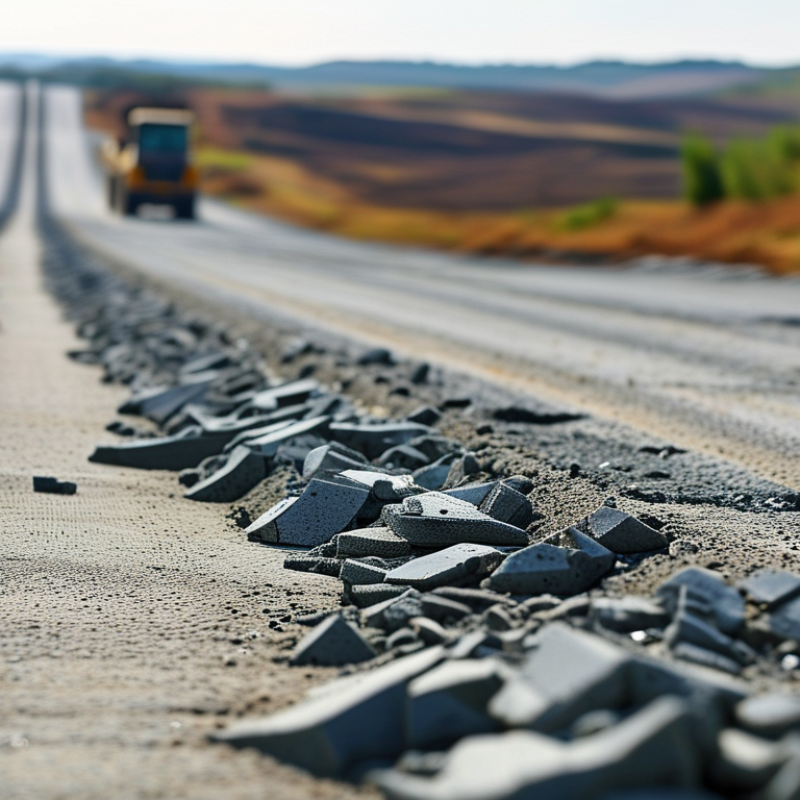
Real projects reveal details that brochures often miss. Consider a rural access road with sharp crushed stone, seasonal rainfall, and repeated truck traffic. The correct geogrid may improve foundation stability, but poor drainage can still undermine the road. Material selection alone is not enough. Site investigation matters.
This guide reviews leading Geogrid Gravel suppliers for international buyers in 2026. It considers manufacturing consistency, technical support, export experience, certifications, and after-sales communication. Some rankings may remain imperfect because supplier data changes, regional performance varies, and public information is not always complete. That limitation deserves attention. Buyers should verify current test reports, production locations, warranty terms, and local compliance before signing contracts. A dependable supplier does not promise miracles. It explains limitations clearly and supports decisions with evidence.
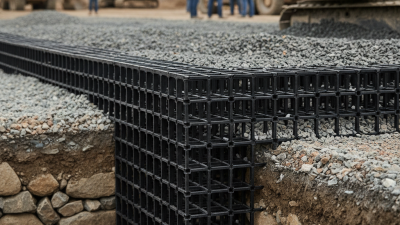
A geogrid gravel system combines a polymer grid with compacted aggregate. The grid contains open cells that hold gravel in place. Under vehicle loads, aggregate particles press into these cells. This creates mechanical interlock and limits sideways movement. The surface stays more stable.
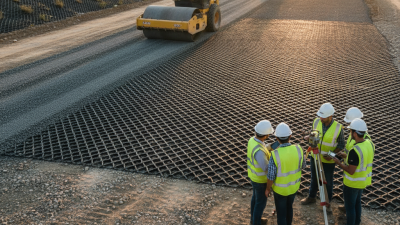
On a rural access road, the process begins with removing soft topsoil and shaping the subgrade. Drainage must be considered before placing any grid. Water can weaken soil beneath even a well-built surface. The grid lies flat over the prepared ground, with overlaps secured according to the project design. Workers then spread angular gravel across the grid and compact it in controlled layers. Small details matter.
Performance depends on soil strength, traffic weight, rainfall, gravel quality, and edge restraint. A geogrid cannot correct poor drainage or replace proper compaction. Some sites also need a geotextile layer to separate weak soil from the aggregate. Site reviews often reveal uneven grading or insufficient cover above the grid. Results are not automatic. Global buyers should request installation guidance, load data, material specifications, and climate suitability from suppliers. Independent testing and clear project records make comparisons more reliable. Even experienced contractors may need to adjust the design after inspecting actual ground conditions.
Geogrid selection begins with the ground, not the catalog. Uniaxial geogrids support slopes and retaining structures by directing tensile forces along one axis. Biaxial geogrids stabilize gravel beneath roads, yards, and temporary access routes. Triaxial designs can spread vehicle loads across several directions, especially on weak subgrades.
Material choice affects service life. Polypropylene offers useful stiffness and chemical resistance for many aggregate applications. High-density polyethylene handles moisture and certain harsh environments well. Polyester provides high tensile strength and low elongation, but it may require protective coating. Check tensile strength, junction efficiency, aperture size, creep resistance, and UV performance. A large strength number alone can mislead.
Tips: Request test reports, production-lot traceability, and installation guidance. Compare strength at the design strain, not only ultimate strength. Inspect sample rolls for consistent apertures and clean welds. Keep drainage in the design.
In field assessments, I have seen poor results caused by soft soil, insufficient overlap, or careless placement. The geogrid was not always the problem. Still, supplier documentation matters. Reliable suppliers should explain test methods, raw materials, tolerances, and storage conditions without vague claims. For global purchasing, confirm packaging dimensions, export documents, and technical support before ordering. One judgment call remains: laboratory data cannot fully predict every site. Local soil testing and a cautious trial section can reveal weaknesses before full construction.
Evaluating top global geogrid gravel suppliers in 2026 requires more than comparing prices. Begin with verified tensile strength, aperture structure, polymer type, and junction performance. ASTM D6637 provides the key testing framework for geogrid tensile properties. Ask suppliers for complete laboratory reports, not isolated product figures.
The U.S. Federal Highway Administration reports that properly designed geogrid-reinforced aggregate layers can reduce aggregate thickness by roughly 20–50%, depending on soil strength, traffic, and drainage. That range is significant. It is not guaranteed. A reliable supplier should provide project calculations, installation guidance, and performance records from similar climates. Check whether testing reflects wet subgrade, freeze-thaw cycles, and heavy construction traffic. Grand View Research also identifies infrastructure development as a major driver of geosynthetics demand through 2030, increasing pressure on suppliers to prove capacity and consistency.
Tips: Request three recent batch certificates. Compare test methods carefully. Inspect roll labeling, packaging, and storage conditions. Confirm production lead times in writing. A low quotation may hide weak quality control or expensive delays. I would also question unusually perfect claims; field performance often depends on workmanship, drainage, and aggregate placement. Supplier evaluation remains partly technical judgment, and that judgment should be recorded before purchasing.
This buyer-focused framework uses a suggested 100% evaluation weighting for comparing geogrid and gravel suppliers. Product compliance and technical performance receive the highest weighting, followed by supply capacity, export documentation, logistics reliability, and total delivered cost. Buyers can adjust the percentages according to project specifications, destination requirements, and contract conditions.
Top Geogrid Gravel Suppliers for Global Buyers?
Regional supplier strength matters as much as price. A 2024 MarketsandMarkets report estimates the global geogrid market at about USD 1.1 billion, with infrastructure spending supporting steady growth. In North America, experienced suppliers often provide biaxial and uniaxial geogrids for road bases, retaining walls, and access roads. Their expertise usually includes soil reports, loading calculations, and installation guidance. Buyers should request tensile strength data, aperture dimensions, and test results under ASTM D6637 or equivalent standards.
European suppliers commonly emphasize recycled polymers, traceability, and compliance documentation. Their product ranges may include polyester, polypropylene, and coated geogrids for railways, ports, and steep slopes. In Asia-Pacific, suppliers often offer broader production capacity and competitive pricing. Some can combine geogrid, geotextile, drainage composite, and gravel stabilization systems. However, low prices can hide weaker quality control. That deserves scrutiny.
Regional experience is visible in small details. A reliable supplier explains how the grid performs beneath angular gravel, wet clay, or repeated truck traffic. They should provide installation drawings, roll dimensions, sampling procedures, and warranty terms. The Global Infrastructure Outlook reports continuing worldwide infrastructure investment needs, yet supplier claims still require independent verification. I would not rely on a catalog alone. Field references, batch certificates, and project-specific design support matter more. Mistakes happen. A technically strong supplier admits limitations, especially when local soil conditions remain uncertain.
Anonymous regional supplier profiles and buyer-focused product benchmarks for geogrid applications in gravel roads, working platforms, reinforced soil, and erosion-control systems.
| Regional Supplier Profile | Primary Market Coverage | Common Geogrid Product Range | Typical Material and Structure | Core Gravel and Civil Applications | Relevant Standards Commonly Requested | Distinctive Technical Expertise | Key Buyer Verification Points |
|---|---|---|---|---|---|---|---|
| Profile A — East Asia | Asia-Pacific, Africa, the Middle East, Latin America, and private-label export channels | Biaxial geogrids for granular bases; uniaxial geogrids for reinforced soil; geogrid-geotextile composites | Extruded or punched-and-drawn polypropylene; high-density polyethylene for uniaxial products; coated composite systems | Unpaved roads, haul roads, soft subgrades, temporary access roads, retaining walls, and embankments | ISO 10318, ISO 10319, ASTM D4759, ASTM D6637, EN 13249, EN 13251 | High-volume roll production, customized roll widths, containerized export packing, and cost-focused product series | Request tensile-strength test direction, strain-at-peak data, aperture dimensions, polymer type, UV-resistance evidence, and lot traceability |
| Profile B — South Asia | South Asia, Southeast Asia, East Africa, and infrastructure contractors in developing markets | Biaxial polypropylene geogrids, low-cost road-base grades, and reinforcement composites with separator geotextiles | Polypropylene geogrids selected for aggregate interlock and subgrade stabilization; nonwoven or woven geotextile combinations | Rural roads, flood-prone roads, railway access, drainage layers, pavement rehabilitation, and construction platforms | ISO 10319, ASTM D6637, ASTM D4759, EN 13249, EN 13250, EN 13252 | Practical design support for weak soils, flexible minimum-order quantities, and product combinations for separation and reinforcement | Confirm junction efficiency, installation damage resistance, aperture stability, roll labeling, factory quality-control frequency, and field installation guidance |
| Profile C — Western Europe | European Union, the United Kingdom, Scandinavia, and specification-led international projects | Certified road-base geogrids, geocomposites, uniaxial reinforcement products, and engineered erosion-control systems | Polypropylene, polyester, or polyethylene structures selected according to load, creep, chemical exposure, and design life | Paved and unpaved roads, rail formations, working platforms, mechanically stabilized earth, and landfill infrastructure | EN 13249, EN 13250, EN 13251, EN 13252, EN 13253, EN 13256, ISO 10319 | Performance-based specification, long-term design reduction factors, sustainability documentation, and project-specific engineering | Check declared characteristics, CE-related documentation where applicable, design-life calculations, creep testing, durability data, and environmental declarations |
| Profile D — North America | United States, Canada, Mexico, and major public-works and commercial construction markets | Base-course stabilization grids, asphalt-interlayer systems, MSE-wall reinforcement, and high-strength uniaxial grids | Polypropylene for aggregate stabilization; polyester or polyethylene for soil reinforcement; coated products for selected applications | Road widening, parking areas, access roads, railway yards, retaining structures, and soft-ground construction platforms | ASTM D4759, ASTM D6637, ASTM D7737, ASTM D4354, AASHTO and project-specific agency specifications | Agency submittals, pavement-section optimization, installation damage assessment, and compatibility with locally available aggregates | Verify conformance to the project agency specification, test method version, junction strength, survivability class, roll dimensions, and domestic delivery capability |
| Profile E — Middle East | Gulf countries, North Africa, desert infrastructure corridors, and energy-sector construction | Biaxial road-base grids, high-strength MSE grids, geocomposites, and products for desert or saline ground conditions | Polypropylene, polyethylene, and polyester structures with attention to UV exposure, temperature, chemical resistance, and installation conditions | Desert roads, oil and gas access routes, port yards, airport platforms, embankments, and reinforced retaining systems | ISO 10319, ASTM D4759, ASTM D6637, EN 13249, EN 13251, and project-specific Gulf or consultant requirements | Heat and UV exposure assessment, saline-soil compatibility, heavy-haul access design, and export logistics for large project packages | Request accelerated durability data, chemical-resistance evidence, storage instructions, installation-temperature limits, and verified project references |
| Profile F — Latin America | Brazil, the Southern Cone, the Andean region, Central America, and Caribbean infrastructure markets | Road-base stabilization geogrids, high-strength soil-reinforcement grids, and geocomposites for wet or variable soils | Polypropylene, polyester, and polyethylene products selected for moisture, drainage, load-transfer, and long-term reinforcement requirements | Mining roads, forestry roads, rural highways, port yards, railway corridors, slopes, and embankments | ISO 10319, ASTM D4759, ASTM D6637, EN 13249, EN 13251, and local public-works specifications | Adaptation to tropical rainfall, lateritic soils, mining loads, remote-site logistics, and locally sourced aggregate conditions | Confirm hydraulic and separation requirements, wet-soil performance, puncture resistance, delivery to remote sites, and Spanish or Portuguese technical support |
| Profile G — Oceania | Australia, New Zealand, Pacific islands, mining regions, and remote-resource projects | Heavy-duty biaxial stabilization grids, uniaxial reinforcement grids, geocomposites, and products for haul-road construction | Polypropylene for aggregate interlock and polyester or polyethylene for reinforced soil; grades selected for severe installation conditions | Mining haul roads, remote airstrips, unsealed roads, rail access, coastal works, and high-load working platforms | ISO 10319, ASTM D4759, ASTM D6637, EN 13249, AS and NZ project specifications where applicable | Heavy-vehicle loading, installation survivability, remote logistics, pavement thickness optimization, and field trials on variable subgrades | Review cyclic-load behavior, construction damage testing, aggregate compatibility, roll handling requirements, and evidence from mining or remote-road projects |
| Profile H — Africa | Sub-Saharan Africa, East Africa, Southern Africa, and donor-funded transport infrastructure | Cost-efficient biaxial grids, geocomposites for separation and drainage, uniaxial grids for slopes, and project-specific reinforcement systems | Polypropylene, polyester, and polyethylene products selected for weak subgrades, high rainfall, temperature variation, and limited maintenance access | Rural roads, lateritic-soil roads, low-volume highways, culverts, embankments, landfill access, and erosion-prone slopes | ISO 10319, ASTM D4759, ASTM D6637, EN 13249, EN 13251, and funding-agency or national road authority requirements | Low-maintenance road design, weak-soil stabilization, multimodal delivery planning, and installation guidance for remote contractors | Validate product availability, replacement lead time, installation training, local aggregate suitability, quality certificates, and total delivered cost |
Global buyers now compare geogrid gravel suppliers by more than quoted price. A reliable supplier should explain polymer type, aperture size, tensile strength, roll dimensions, and production tolerances. Ask for recent test reports from an independent laboratory, not only an internal data sheet. Request samples before placing a container order. Try them on site. Does the grid resist tearing when folded over sharp gravel? Can workers unroll it without excessive stretching? These small observations often reveal practical quality.
Pricing needs a full landed-cost view. Compare material price, sample charges, export packing, inspection fees, ocean freight, insurance, import duties, and inland delivery. Ask whether the quotation uses FOB, CIF, or another trade term. Currency changes can quietly damage a project budget. Keep the offer validity period in writing. A very low quote may reflect thinner ribs, weaker joints, or unstable raw materials. That is not always true, but it deserves questions. I would rather pay slightly more than replace a failed access road.
Shipping checks should match the destination and season. Confirm roll weight, pallet limits, container loading plans, moisture protection, labeling, and document accuracy. Port congestion can delay installation, especially before rainy periods. Get production and dispatch dates, then allow buffer time. Some suppliers answer quickly but provide vague batch records. That is a warning. Still, even careful buyers can miss field conditions. Gravel shape, soil moisture, and compaction equipment change performance. Record these details and share them before final approval. Quality control is never finished at the factory gate.