2026 Best Geotextile Use Practices for Soil Stabilization?
Geotextile use has revolutionized the field of soil stabilization. In recent years, the industry has seen a significant shift towards sustainable practices. A report by the Geosynthetic Institute indicates that geotextiles can reduce erosion by up to 80%. This allows for safer construction and environmental protection.
The effectiveness of geotextile use lies in its ability to enhance soil properties. By providing support, separation, and filtration, these materials improve durability. However, there are challenges to consider. Not all projects see the same success with geotextiles. Proper installation and selection are critical for achieving desired results. A review of various case studies shows mixed outcomes in different soil conditions.
As we move towards 2026, the focus on innovation will shape the best practices for geotextile use. Industry experts emphasize the need for ongoing research. Understanding the long-term performance of these materials will enhance their application. Investing in proper education and training will be essential for industry professionals.
Best Geotextile Types for Soil Stabilization in 2026
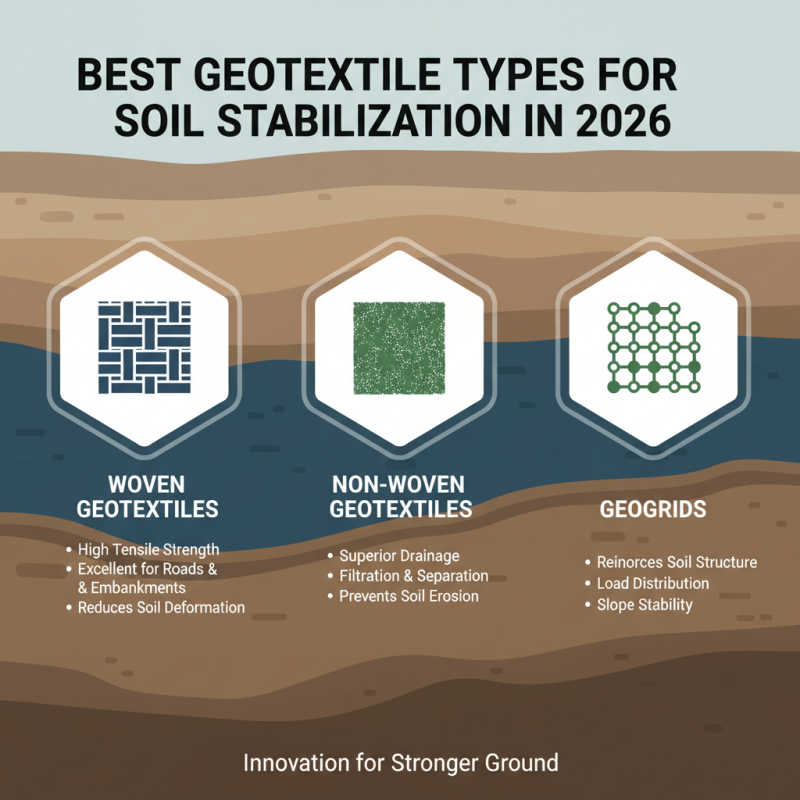
Geotextiles play a crucial role in soil stabilization. Their effectiveness depends on various factors, including the type and application method. In 2026, several geotextile types stand out as the best choices for improving soil strength.
Woven geotextiles are often favored for their durability. They provide excellent tensile strength, making them suitable for heavy loads. Non-woven geotextiles, on the other hand, excel in drainage applications. They filter water while still allowing soil movement. Understanding these differences is vital when selecting the right material for your project.
Of course, even the best geotextiles have limitations. Improper installation can lead to failures in soil stabilization. Factors like soil type, moisture levels, and load conditions must be thoroughly assessed. Often, trial and error plays a role in finding the ideal geotextile for specific situations. Analyzing past projects can lead to better decision-making in future applications.
Key Properties of Geotextiles for Effective Soil Reinforcement
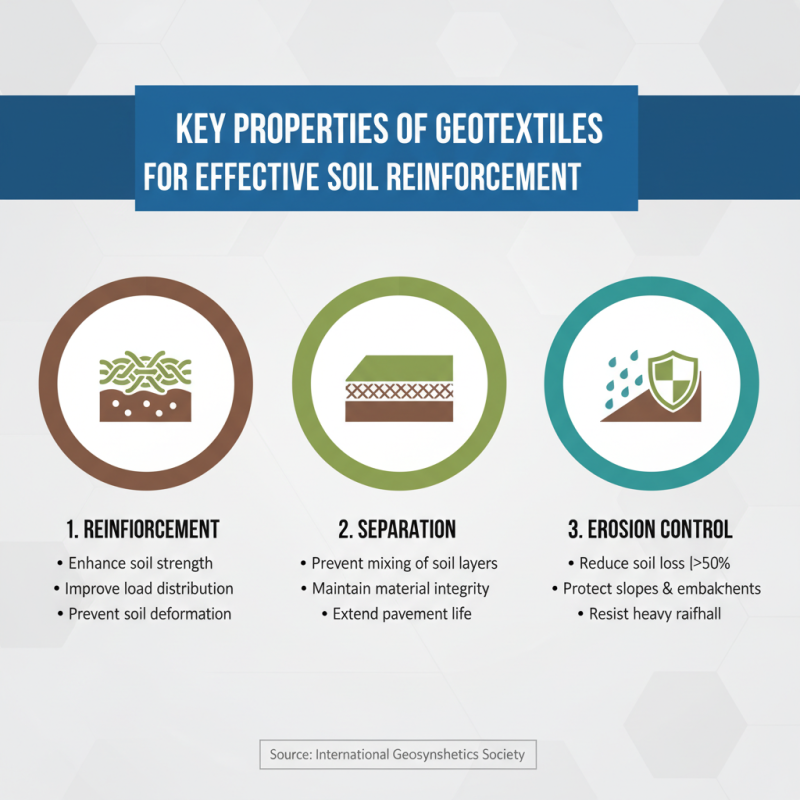
Geotextiles play a crucial role in soil stabilization. These synthetic materials enhance the structural integrity of soils. They work by reinforcing and separating soil layers to optimize load distribution. A study from the International Geosynthetics Society states that geotextiles can reduce soil erosion by more than 50%. This is significant, especially in areas prone to heavy rainfall.
The key properties of geotextiles include durability, permeability, and tensile strength. Durable geotextiles withstand harsh environmental conditions. Permeability allows water to pass through, preventing soil saturation. Low tensile strength can be a concern. It might lead to failures under heavy loads or dynamic conditions. Additionally, some geotextiles lose effectiveness over time, which is an area needing attention.
Proper selection based on project requirements is essential. Different applications call for specific types of geotextiles. A poorly chosen product can lead to costly repairs. Engineers must evaluate soil types and environmental conditions carefully. Ignoring these factors is a common oversight. It’s vital to conduct thorough testing before installation. This approach minimizes risks and fosters effective soil reinforcement.
Installation Techniques for Optimal Geotextile Performance
Effective installation techniques are crucial for achieving optimal geotextile performance in soil stabilization. A 2019 study published in the Journal of Geotechnical Engineering found that improper installation can reduce the performance of geotextiles by up to 40%. This emphasizes the need for trained personnel on-site. Attention to detail during installation is key. For instance, ensuring a smooth surface before placing geotextiles can prevent wrinkling.
Layering also plays an important role. The National Highway Institute recommends overlapping edges by at least 12 inches for stability. This helps in preventing soil migration through the seams. Use of appropriate backfill materials can further enhance the efficacy of geotextiles. However, many projects overlook this aspect, leading to potential failures.
Weather conditions cannot be ignored either. Rain or humidity can alter soil properties and affect installation. Data from geotechnical surveys indicate that projects face up to a 20% risk increase when installations occur during inclement weather. It’s vital to monitor conditions closely and avoid rush jobs that compromise quality. While best practices exist, the field continually faces challenges that require ongoing reflection and adaptation.
Case Studies: Successful Geotextile Applications in Soil Stabilization
Geotextiles play a vital role in soil stabilization, providing multiple benefits in various applications. Recent studies show that proper use of geotextiles can improve soil strength by up to 40%. One remarkable case involved a highway construction project in a high-traffic area where geotextiles were used to support the subgrade. This application reduced the need for extensive excavation, resulting in significant time and cost savings.
Another case study focused on a landfill project that utilized geotextiles for drainage and erosion control. After implementation, engineers observed a 30% reduction in settlement, showcasing the effectiveness of these materials in real-world scenarios. While these successes are notable, challenges remain. In some instances, improper installation led to inadequate performance of geotextiles. This emphasizes the need for skilled professionals and thorough training.
Moreover, selecting the right type of geotextile is crucial. The wrong choice can result in complications, like water infiltration or soil displacement. Continual assessment and adjustments of best practices are essential to maximize the benefits of geotextiles in soil stabilization efforts. The industry must learn from these instances to drive innovation and improvement.
2026 Best Geotextile Use Practices for Soil Stabilization
| Case Study |
Location |
Geotextile Type |
Soil Type |
Application Method |
Outcome |
| Highway Reconstruction |
Texas, USA |
Non-woven |
Clay |
Incorporated into subbase |
Reduced settlement and improved durability |
| Slope Stabilization |
California, USA |
Woven |
Granular |
Wrapped around retaining wall |
Enhanced slope stability, reduced erosion |
| Airport Runway Reinforcement |
Florida, USA |
Composite |
Sand |
Laid beneath aggregate base |
Increased load-bearing capacity, reduced maintenance |
| Retaining Wall System |
New York, USA |
Non-woven |
Silty Clay |
Used behind wall for drainage |
Prevented hydrostatic pressure build-up |
| Park Pathway Installation |
Washington, USA |
Woven |
Loamy Soil |
Placed in layers |
Enhanced pathway longevity and aesthetics |
Future Trends in Geotextile Technology for Soil Improvement
Geotextile technology is evolving rapidly, bringing new opportunities for soil improvement. In 2026, we can expect innovative applications that enhance soil stabilization. Recycled materials will play a significant role in these practices. Using biodegradable geotextiles may become common. They offer sustainable solutions without compromising on performance.
Tips: Always consider the local environment when choosing materials. Testing the soil condition is essential to ensure compatibility. Monitor the performance over time to adapt your strategies.
Future trends indicate greater integration of smart technology in geotextiles. Sensors may help monitor soil stability in real-time. These innovations can lead to proactive maintenance, preventing issues before they escalate.
However, there are challenges. The cost of new technologies may be high. Not all regions may have access to advanced materials. It’s crucial to assess whether these innovations fit your project needs. Balancing cost and performance is key to success in soil stabilization efforts.