How to Choose the Right GSM Geotextile for Your Project?
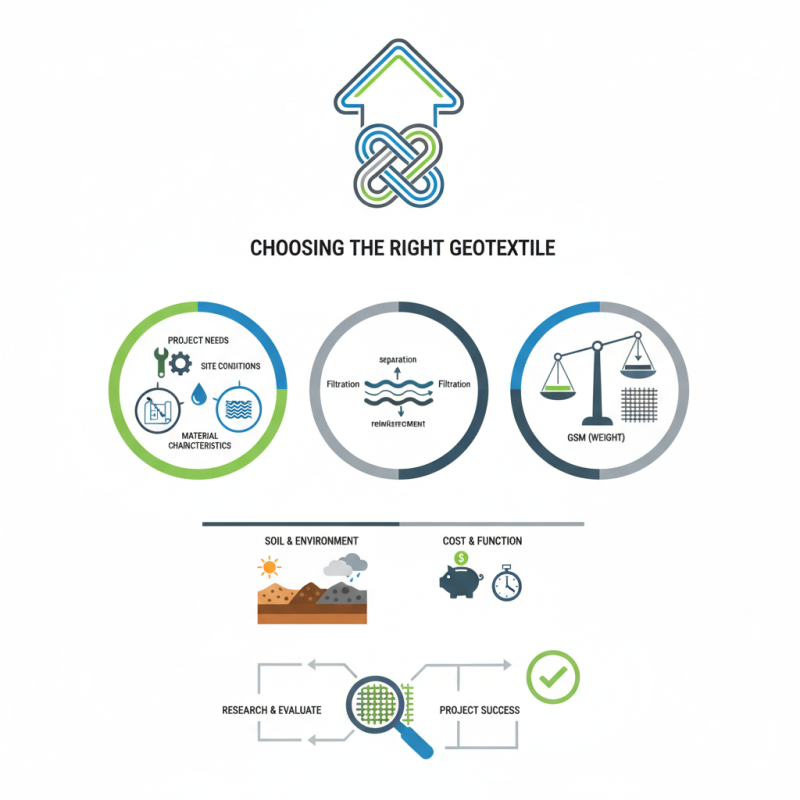
Choosing the right GSM geotextile for your project can be challenging. Various factors must be considered. These include your project's unique needs, site conditions, and material characteristics. GSM geotextiles serve multiple purposes, such as separation, filtration, and reinforcement. However, not all geotextiles are created equal.
The weight, or GSM, of the geotextile plays a critical role. A higher GSM often indicates greater strength and durability. But higher weight doesn't always mean better performance. For example, a lightweight material might be ideal for certain applications. Knowing your soil type and environmental conditions is essential when deciding.
What works for one project may not work for another. Achieving the right balance between functionality and cost is vital. Take time to research and evaluate different options. Consider testing samples on-site. It's a process that may reveal unexpected insights. The right GSM geotextile can significantly impact your project's success.
Understanding GSM Geotextiles: Definitions and Applications Overview
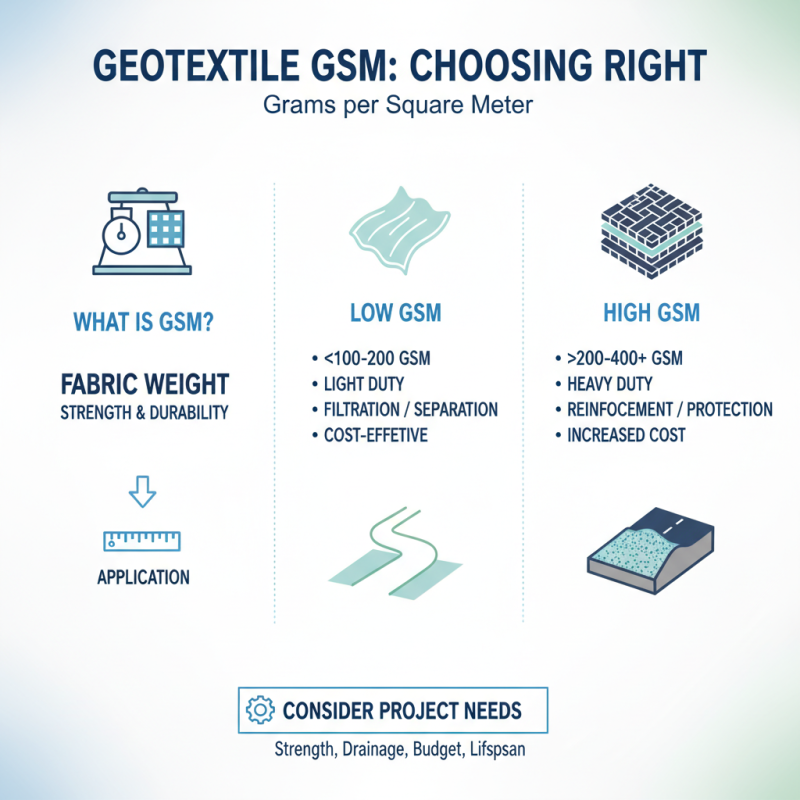
When working with geotextiles, understanding GSM (grams per square meter) is crucial. GSM determines the weight and durability of fabric used in various applications. Higher GSM values generally mean stronger, thicker materials. These fabrics are commonly used in civil engineering, landscaping, and erosion control. Applications vary based on the type of project. For example, a road construction project demands different GSM requirements compared to agricultural uses.
Tips: Assess your project's specific needs. Think about soil type, moisture levels, and expected loads. These factors influence the appropriate GSM selection. It’s important to consult with professionals familiar with local conditions and regulations. They can guide you to the right choices.
GSM geotextiles can differ widely in performance. Choosing the wrong type can lead to project delays or failures. Knowing your application is key. Sometimes, lower GSM may work just fine. The cost also varies with GSM levels. Sometimes, budget constraints influence material choices. Carefully weighing prices against performance is vital for long-term success.
Key Factors Influencing GSM Selection for Geotextile Projects
Choosing the right GSM for geotextiles is crucial. GSM stands for grams per square meter, indicating the fabric’s weight. The weight affects strength, durability, and application. A higher GSM often implies better durability but can also increase costs. Think about your project's specific needs before deciding.
Site conditions play a significant role. For projects exposed to heavy loads, a higher GSM is often necessary. Conversely, lighter GSM might suffice in less demanding situations. Climate also influences choice. Areas with heavy rainfall may require a denser fabric to prevent erosion.
Evaluating the intended use is essential. Separation, filtration, and reinforcement all have different GSM requirements. It's not a one-size-fits-all scenario. Fluctuations in budget and availability may prompt a reconsideration. While balancing performance and cost, always reflect on the long-term implications of your GSM choice.
Comparative Analysis of GSM Values for Different Geotechnical Applications
When selecting GSM geotextiles, understanding their weight is crucial. The weight, measured in grams per square meter (GSM), determines a geotextile's ability to perform under various conditions. For instance, lightweight geotextiles with a GSM of around 100 are often used for filtration. They allow water to pass through while retaining soil particles. In contrast, heavier fabrics, ranging from 200 to 500 GSM, offer superior strength for applications like erosion control and soil stabilization.
A comparative analysis highlights that different geotechnical applications require different GSM values. Research shows that subgrade stabilization typically benefits from 250-300 GSM geotextiles. These values provide enough strength to support heavy loads while enhancing drainage. Conversely, in landscape applications, lighter geotextiles may suffice. A survey from industry reports noted that using a 150 GSM geotextile in landscaped areas significantly reduced soil erosion rates compared to bare soil.
However, understanding these intricacies is not always straightforward. Miscalculations can lead to underperformance. Some engineers assume that higher GSM always means better performance, which is not correct. Each project has unique requirements that mandate appropriate weight selection. Assessing soil type, water flow, and load conditions is vital, even if it complicates the choice process. The analysis of GSM values shows that there is often a gap in practical application knowledge among professionals. This highlights the need for continuous education and research in the field.
How to Choose the Right GSM Geotextile for Your Project? - Comparative Analysis of GSM Values for Different Geotechnical Applications
| Application |
GSM Value (g/m2) |
Material Type |
Recommended Thickness (mm) |
| Road Construction |
150 - 200 |
Non-woven |
5 - 10 |
| Drainage Systems |
120 - 180 |
Woven |
4 - 8 |
| Erosion Control |
200 - 400 |
Non-woven |
10 - 15 |
| Landfill Cover |
220 - 300 |
Woven |
6 - 12 |
| Wetlands Construction |
80 - 150 |
Non-woven |
3 - 7 |
Industry Standards and Testing Methods for GSM Geotextiles
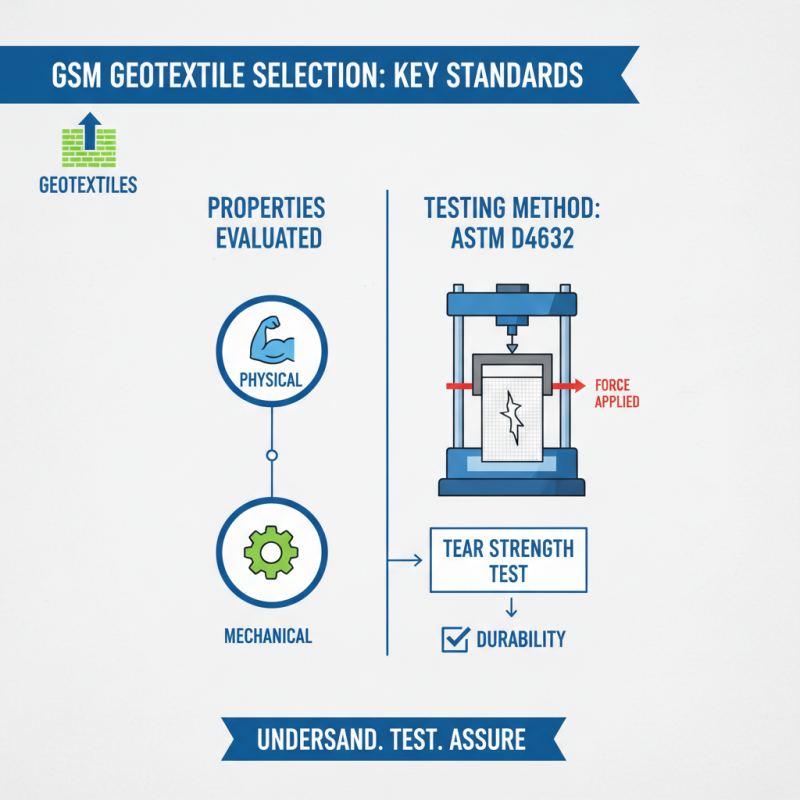
When selecting a GSM geotextile, understanding industry standards and testing methods is crucial. Geotextiles are evaluated based on their physical and mechanical properties. For instance, according to the ASTM D4632 standard, the tear strength must be tested using specific equipment. This involves applying a force until the material tears, determining its durability in various applications.
Another industry benchmark is the AASHTO M288 standard. This standard emphasizes the importance of permeability and tensile strength. The permeability test assesses how easily water can flow through the geotextile. The tensile strength test involves stretching the material until it fails, providing insights into its load-bearing capacity.
Many projects face challenges in roadside maintenance, drainage solutions, or erosion control. Misjudgments in GSM selection can lead to project failures. A geotextile that doesn't meet the required strength may rip under pressure. Similarly, poor permeability can result in water buildup and undermine structures. Understanding these standards helps avoid costly mistakes. The fine line between compliance and failure warrants careful reflection. Do the materials truly meet project needs?
Case Studies: Effective GSM Choices in Real-World Projects
When selecting the right GSM geotextile for your project, real-world cases provide valuable insights. In a recent road construction project, engineers chose 200 GSM geotextile. This choice prevented soil erosion, maintaining road integrity despite heavy rainfall. A report from the Geotechnical Engineering Association noted that using the correct GSM can enhance project durability by up to 30%.
Another example involved a drainage system installation using 150 GSM geotextile. It efficiently filtered water while allowing soil stabilization. However, some contractors found that the GSM was lower than required, leading to unexpected maintenance costs. This highlights the need for careful GSM assessment.
Tip: Always evaluate project requirements before finalizing GSM. Underestimating the GSM can cause significant long-term issues.
In another case, a highway reinforcement project faced challenges when a higher GSM was chosen. Although it provided excellent support, the cost significantly increased. Balancing functionality and budget is crucial. Too high a GSM might not always be necessary.
Tip: Conduct a cost-benefit analysis on different GSM options early in planning. A well-informed decision can save resources.