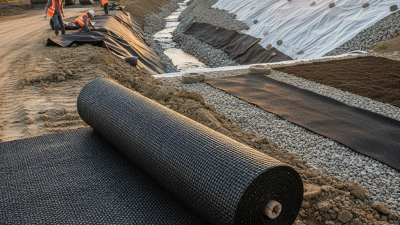
How to Choose the Right Geotextile GSM from China?
Choosing the right Geotextile GSM from China is not simply a matter of selecting the heaviest fabric. GSM means grams per square metre, but weight alone cannot predict site performance. A 200 GSM separator may suit a stable sandy subgrade, while a 600 GSM woven geotextile may be necessary beneath crushed stone and repeated construction traffic.
Industry data shows why this decision deserves careful attention. Grand View Research reports continuing growth in the global geotextiles market, driven by roads, drainage, erosion control, and landfill construction. MarketsandMarkets also identifies infrastructure development as a major demand factor. These reports indicate expanding procurement opportunities, but they do not replace project-specific engineering. The numbers look encouraging. The ground may disagree.
Robert M. Koerner, a leading geosynthetics educator, stated, “The proper selection of a geotextile depends on its intended function.” That principle remains practical when evaluating Chinese suppliers. Buyers should compare tensile strength, puncture resistance, apparent opening size, permeability, UV stability, and manufacturing tolerance. Request laboratory reports, production samples, and test results linked to recognized ASTM or ISO methods. Inspect the roll label, packaging, stitching, and actual fabric weight. Small differences matter.
A drainage project may prioritize water flow over mass. A temporary access road may demand stronger puncture resistance. Field experience also shows that cheap, oversized GSM can create unnecessary freight costs without solving filtration failure. This guide examines how to match Geotextile GSM with soil conditions, installation stress, service life, and supplier reliability. GSM is useful. It is not the whole answer.
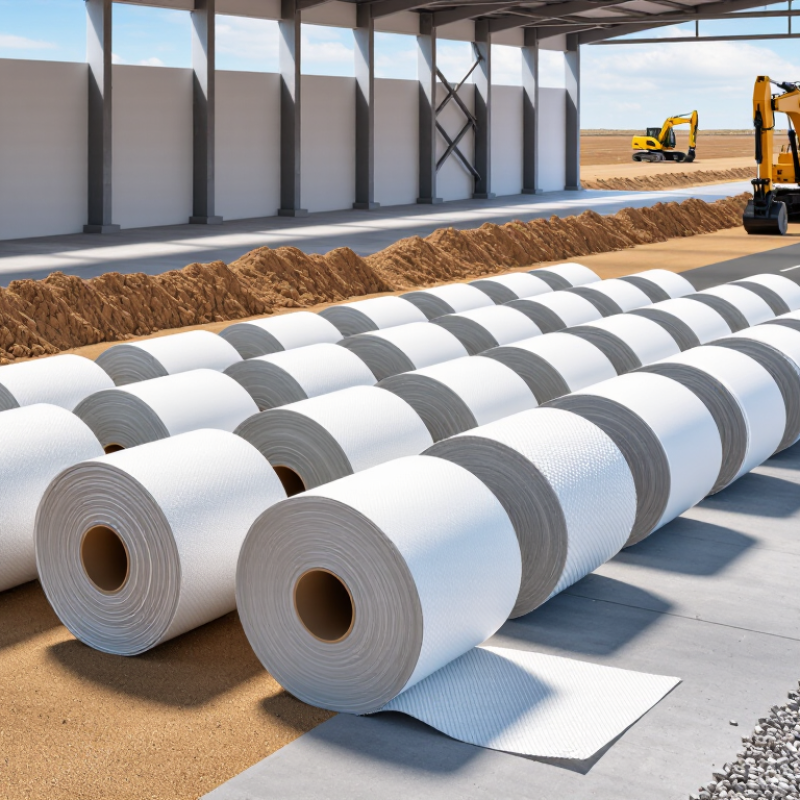
What Geotextile GSM Means and Why It Matters
GSM means grams per square meter, the mass of one square meter of geotextile. A 200 GSM fabric weighs about 200 grams per square meter. ASTM D5261 defines the laboratory method for measuring this value. However, GSM does not directly equal strength, drainage capacity, or service life. The U.S. Federal Highway Administration’s NHI-07-092 guidance evaluates geotextiles through tensile strength, puncture resistance, permittivity, and apparent opening size. GSM is only one part of the decision.
It still matters on site. Heavier nonwoven fabric often provides better cushioning beneath angular stone and reduces handling damage. A lighter fabric may be suitable for separating sand from soil in a low-load drainage trench. More weight is not automatically better. High GSM can reduce water flow and increase installation cost. I have seen buyers select fabric by weight alone, then discover poor filtration during heavy rain. That choice needs reconsideration.
When choosing geotextile GSM from China, match the weight to soil conditions, aggregate size, traffic, and drainage requirements. Request lot-specific test reports, not only a product brochure. Check ASTM D4632 tensile strength, ASTM D4833 puncture resistance, ASTM D4491 permittivity, and ASTM D4751 apparent opening size. The 2024 MarketsandMarkets geotextiles report identifies infrastructure and drainage as major demand areas, but market growth does not replace project testing. Ask for roll width, tolerance, batch number, and independent inspection records. A small sample test is worthwhile. Supplier claims can be incomplete.
Match GSM to Soil, Load, Drainage, and Separation Requirements
How to Choose the Right Geotextile GSM from China?
Geotextile GSM should match soil, load, drainage, and separation requirements. It is not a simple “heavier is better” decision. The FHWA Geosynthetic Design and Construction Guidelines, FHWA-NHI-07-092, links selection to puncture, tear, seam, filtration, and installation conditions. For light separation on firm sandy soil, 150–250 g/m² may be a practical starting range. Soft clay, angular aggregate, or frequent construction traffic may require 300–600 g/m². These figures are screening values, not final specifications.
Load changes the answer. A temporary access road over weak subgrade needs higher survivability than a garden drainage layer. A 500 g/m² fabric can still fail if trucks place sharp stone directly onto it. A smooth working platform, controlled aggregate placement, and adequate overlap matter greatly. Site experience often reveals this uncomfortable fact: GSM cannot repair poor installation.
Drainage requires more than fabric weight. AASHTO M 288-17 evaluates geotextiles through apparent opening size, permittivity, and water flow, while USACE EM 1110-2-1901 emphasizes permeability and clogging control. For silty soil, specify filtration performance and test results, not GSM alone. Ask Chinese suppliers for mass per unit area, tensile strength, puncture resistance, apparent opening size, and permittivity reports. Check testing methods and laboratory dates. One overlooked detail can undermine an otherwise suitable specification.
Check Chinese Product Quality, Standards, and Supplier Records
How to Choose the Right Geotextile GSM from China?
GSM is only a starting point. A heavier geotextile may improve puncture resistance, but it can reduce drainage performance. Check mass per unit area together with tensile strength, elongation, apparent opening size, and permittivity. The 2024 Grand View Research market report projected geotextile demand to grow above 6% annually, increasing supplier choices and quality risks. My sourcing experience suggests that a low price often hides inconsistent polymer content or weak process control.
Ask Chinese suppliers for recent, lot-specific test reports. The reports should identify the production date, material type, GSM tolerance, and testing laboratory. Compare methods with ISO 9864 for mass, ISO 10319 for tensile strength, and ISO 11058 for water permeability. ASTM methods may also apply to your project specification. Do not accept a generic certificate. It may not represent your shipment.
Supplier records matter. Request three years of export references, factory audit findings, complaint records, and corrective-action evidence. Verify whether production is continuous or subcontracted. Inspect rolls for uneven edges, wrinkles, oil marks, and loose packaging. Small details matter.
A 5% GSM variation can affect design assumptions. Maybe not dramatically, but it deserves checking. ISO 9001 certification supports process management, not automatic product quality. Independent pre-shipment testing is safer, especially for high-load roads, drainage systems, and landfill applications. Ask for retained samples. Then test them before installation.
Confirm GSM Through Sampling, Testing, and Final Inspection
How to Choose the Right Geotextile GSM from China?
Confirm GSM Through Sampling, Testing, and Final Inspection
GSM means grams per square metre. A 300 GSM fabric should weigh about 300 grams per square metre. A 1% error equals 3 grams. That difference can affect transport, coverage, and project calculations. The Federal Highway Administration’s NHI-07-092 guidance treats mass as only one property. Strength, apparent opening size, and permittivity also require verification.
Sampling should cover different production lots and roll positions. Do not test only the cleanest roll. Cut specimens according to ASTM D5261, then record conditioning, sample size, and weighing accuracy. An accredited laboratory should test tensile strength under ASTM D4632, apparent opening size under ASTM D4751, and permittivity under ASTM D4491. The Geosynthetic Institute’s GRI-GT12(a) specification also links geotextile acceptance with measured property values, not GSM alone. Small details matter.
Before shipment, inspect every roll label, width, length, edge condition, wrapping, and visible damage. Compare the inspection sheet with the approved sample. A heavier fabric is not automatically better. It may have unsuitable openings or poor water flow. One weakness in this process is relying on supplier photographs; they cannot prove actual GSM. Recheck disputed rolls, document deviations, and accept uncertainty before it becomes an installation problem.