How to Choose the Right Plastic Geonet for Your Project?
Selecting the right Plastic Geonet for your project can be a daunting task. Given the variety of options available, it is essential to understand their specific applications and features. Plastic Geonets serve multiple purposes, such as drainage, filtration, and reinforcement in geotechnical engineering.
To make an informed decision, consider factors such as material type, mesh size, and environmental compatibility. Each project has unique requirements, and a poorly chosen geonet can lead to significant complications. Take the time to assess your project's needs and expectations. Consult with professionals who specialize in geosynthetics for insights. Their expertise can guide you towards the best choice.
In this article, we aim to demystify the process of selecting a Plastic Geonet. We will discuss various aspects that may influence your decision. Practical examples and case studies will illustrate potential pitfalls and successes. This will help you reflect on your particular situation, ensuring you make a well-informed choice.
Understanding Plastic Geonets: Types and Applications
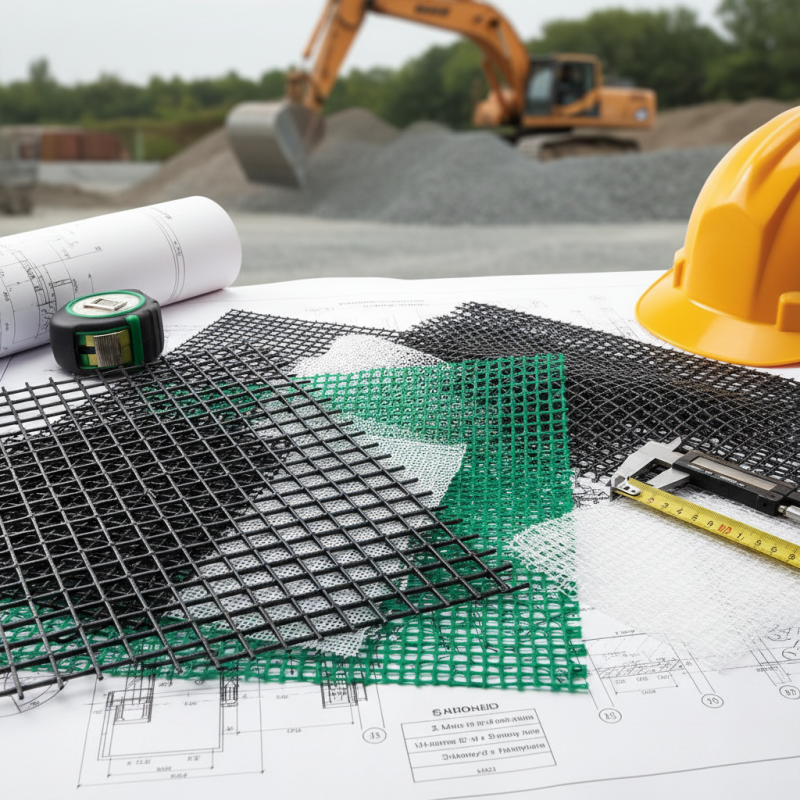
Plastic geonets are essential in various applications, particularly in civil engineering and environmental projects. They improve drainage performance in geotechnical works. A recent report by the Geosynthetics Research Institute indicated that the global demand for geonets is growing at a rate of 5.2% annually. This is largely due to the increasing need for effective drainage solutions.
Different types of plastic geonets exist, including two-dimensional and three-dimensional variations. Two-dimensional geonets are typically used in applications like road construction. Their design allows for efficient flow in horizontal and vertical directions. On the other hand, three-dimensional geonets support more complex drainage structures, especially in landfill applications.
Choosing the right type of geonet hinges on project requirements. Factors include expected load, installation conditions, and environmental factors. For urban areas with heavy rainfall, a high-flow geonet may be necessary, while lighter applications may suffice in low-drainage zones. Misjudging any of these factors can lead to project inefficiencies or failures. A study highlighted that 20% of drainage issues stem from improper product selection.
How to Choose the Right Plastic Geonet for Your Project? - Understanding Plastic Geonets: Types and Applications
| Type of Plastic Geonet |
Material |
Typical Applications |
Drainage Capacity (L/s/m) |
UV Resistance |
| 3D Geonet |
HDPE |
Landfill drainage, erosion control |
25 |
High |
| 2D Geonet |
PP |
Road construction, foundation drainage |
20 |
Medium |
| Composite Geonet |
Composite materials |
Geotechnical applications, drainage in soft soils |
30 |
High |
| Bi-Planar Geonet |
HDPE |
Drainage in agricultural applications |
22 |
High |
| Tri-Planar Geonet |
PP |
Environmental remediation, landfill covers |
27 |
Medium |
Factors to Consider When Selecting a Plastic Geonet
When selecting a plastic geonet for your project, several factors come into play. The type of erosion or drainage control you require heavily influences your choice. Knowing the geotechnical characteristics of your site can help guide you. Consider the soil type, drainage needs, and the specific project requirements before settling on a product.
Tips for selecting include assessing the network's weight. A heavier geonet may provide more durability but can be harder to handle. Think about installation methods as well. Not all projects allow for easy accessibility, which may require lighter materials.
Another key aspect to consider is the geonet's permeability. High permeability can enhance drainage but may reduce structural support. Hence, finding a balance is crucial. Remember, not all geonets perform the same across different conditions. Testing in your project’s environment may reveal unexpected challenges.
Comparison of Plastic Geonet Types Based on Key Properties
Evaluating Material Properties and Durability
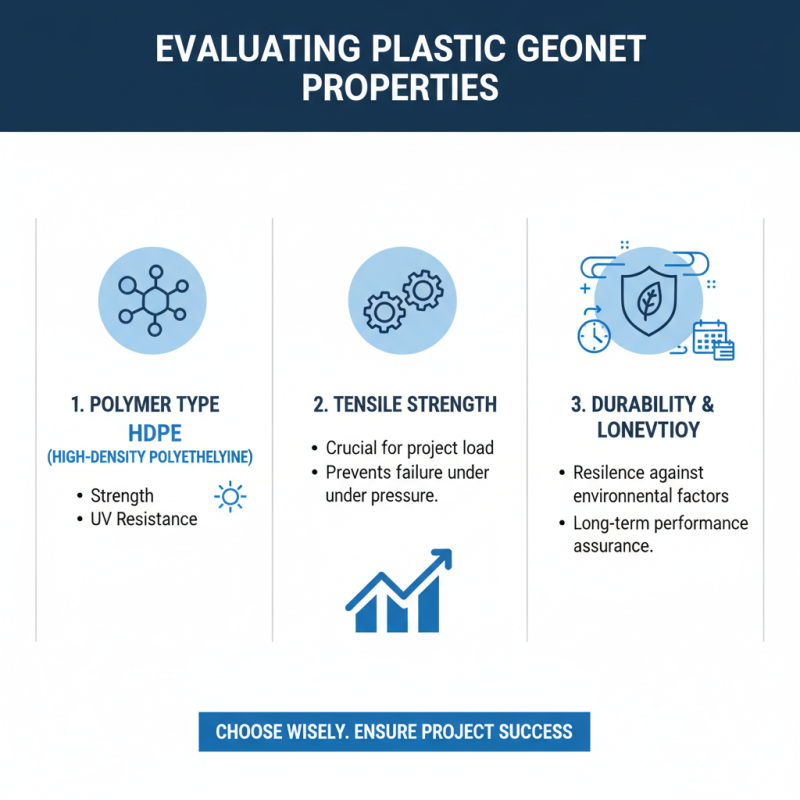
When selecting a plastic geonet, assessing material properties is crucial. Focus on the type of polymer used. High-density polyethylene (HDPE) is commonly chosen for its strength and UV resistance. Ensure the geonet has a suitable tensile strength for your project. A weaker material may fail under pressure.
Durability is another key factor. Evaluate how the geonet performs over time, especially in harsh conditions. Consider exposure to chemicals, temperature variations, and moisture. This will help identify potential weaknesses. Maybe the longevity of a product is often overestimated. Take the time to research real-world applications and their outcomes.
Look for third-party testing data or certifications. This adds credibility to your choices. However, not all certifications are created equal. Always ask for clarification on test methods and results. It’s beneficial to consult industry professionals with hands-on experience. Their insights can prevent missteps. Remember, the right geonet can make a significant difference, but informed choices matter greatly.
Determining Project-Specific Requirements for Geonet Use
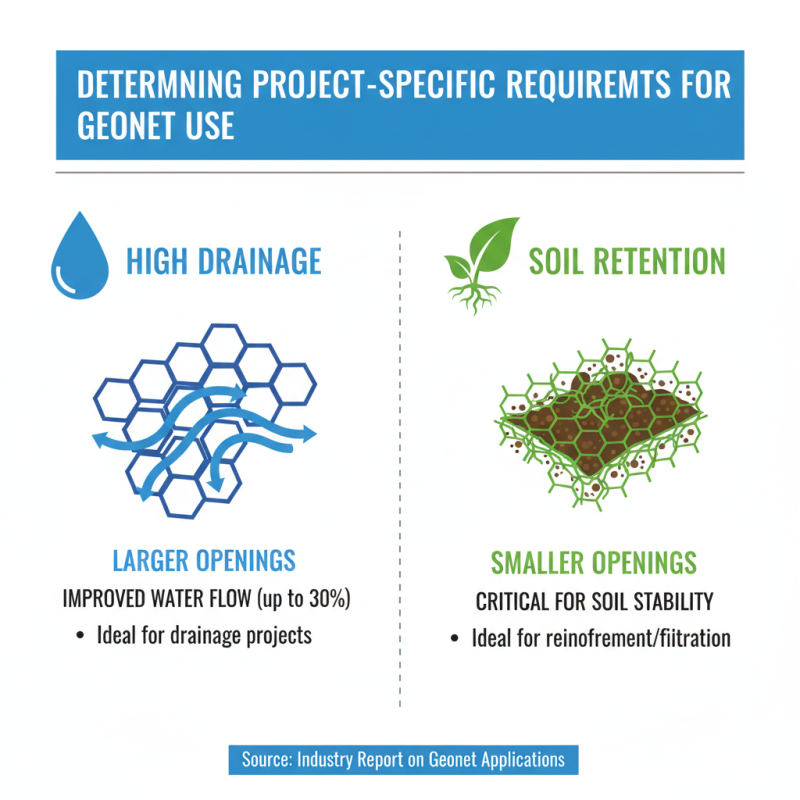
When selecting a plastic geonet for your project, it's essential to assess specific requirements. These requirements can vary greatly depending on the application, such as drainage, reinforcement, or filtration. According to a recent industry report, projects that require high drainage capacity benefit from geonets with larger openings. The optimal size can improve water flow by up to 30%. However, larger openings may compromise soil retention, which is critical in certain applications.
Consider the environmental conditions as well. Geonets used in harsh climates need to resist UV degradation and extreme temperatures. A study noted that up to 25% of geonets fail prematurely when not suited for their installation environment. It's crucial to evaluate potential long-term impacts, including how the material interacts with surrounding soil and groundwater. While geonets are often selected for their strength, factors like chemical resistance and permeability should not be overlooked.
Cost is another significant factor. A cheaper geonet might save money upfront but could lead to maintenance costs later. Some projects reported increased lifecycle costs resulting from premature failure of low-quality materials. Understanding these aspects ensures a balanced decision and reflects back on project durability and integrity.
Cost Analysis: Balancing Quality and Budget for Your Project
When selecting a plastic geonet, cost analysis is crucial. It helps in balancing quality and budget effectively. Understanding the project requirements is essential. Higher quality geonets may come with added benefits, such as improved durability and functionality. Sometimes, opting for economical choices ends up being more expensive. This may happen due to increased maintenance costs and potential failures.
Tips: Always assess the long-term benefits against the upfront costs. Consider the overall lifespan of the geonet. It’s valuable to evaluate how it performs under different conditions. Remember, picking a cheaper option may save money initially but could lead to higher expenses later.
Another important aspect is sourcing. Finding reliable suppliers with a strong reputation can influence both quality and price. Don’t hesitate to ask for samples or case studies. Reflect on your previous experiences with suppliers. Were there any issues that could have been avoided? Evaluating feedback is necessary to optimize your choices. Quality materials may reduce risks in the long run.