7 Tips for Choosing the Right GSM Geotextile?
Choosing the right GSM Geotextile is not simply a matter of selecting the heaviest fabric. GSM means grams per square metre, but weight alone cannot predict field performance. Soil pressure, drainage needs, installation methods, and exposure conditions all influence the correct choice. A 200 GSM fabric may suit a garden pathway, while a road subgrade may require a stronger, puncture-resistant product.
Dr. Robert M. Koerner, a leading geosynthetics authority, explains, “Geosynthetics are synthetic materials used in geotechnical engineering.” His principle remains useful here. The material must match the engineering task. Not the sales label.
This guide explores seven practical tips for choosing the right GSM Geotextile. It considers filtration, separation, reinforcement, drainage, tensile strength, and site conditions. You will also see why fabric quality, polymer type, and testing standards deserve close attention. A heavier fabric can still fail if its pores clog quickly or its seams tear during placement.
Look closely at the soil.
Clay behaves differently from crushed stone. Wet ground creates different risks from dry, compacted soil. Installation mistakes matter too. Sharp aggregate can puncture a fabric before the project is finished. That detail is easy to overlook.
The honest answer is sometimes unclear. Product datasheets may omit important test conditions. Therefore, compare certified performance data, request samples, and consult a qualified geotechnical professional when project risks are high. These steps do not guarantee perfection. They reduce avoidable mistakes and support a more dependable GSM Geotextile selection.
Define the Project Requirements Before Choosing GSM Geotextile
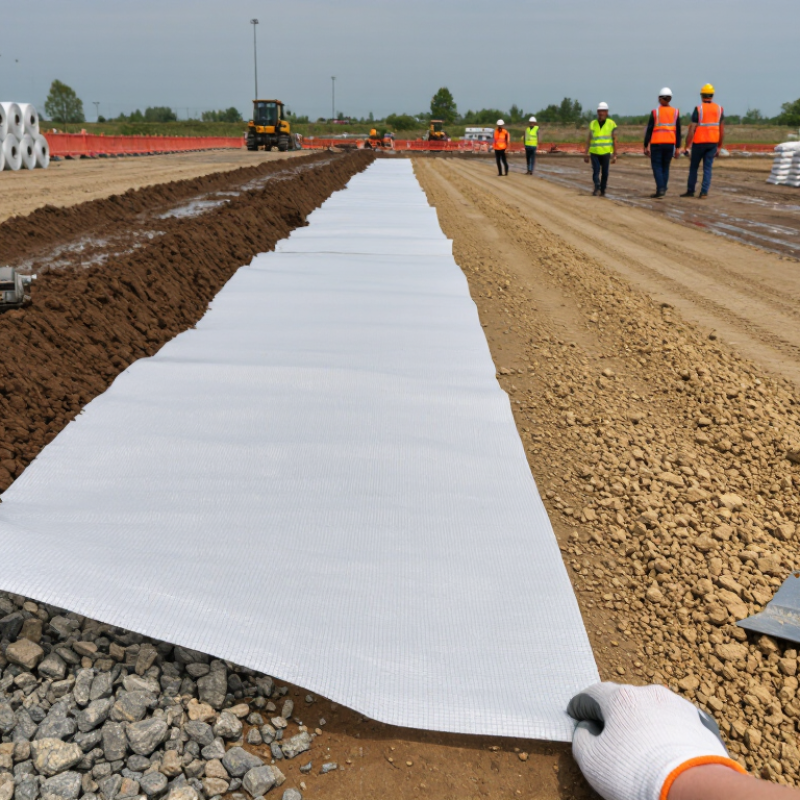
Before choosing GSM geotextile, define the project requirements clearly. Identify the soil type, expected load, drainage path, and installation conditions. A geotextile under a gravel road faces different stress than one beneath a landscaped slope. Record vehicle weight, subgrade softness, water flow, and construction traffic. Small details matter.
For separation, check whether the fabric can prevent soil and aggregate from mixing. For filtration, examine pore size and water permeability. Drainage projects need stable flow performance, not simply a higher GSM value. Protection layers may require stronger puncture resistance. Do not treat GSM as the only selection factor. It is one clue.
Site exposure also affects the specification. Consider ultraviolet exposure, temperature changes, sharp stones, and handling during placement. Ask suppliers for test data covering tensile strength, puncture resistance, and apparent opening size. Confirm that the data matches recognized testing methods. Installation quality matters too. Wrinkles, exposed edges, and insufficient overlaps can reduce performance.
In field reviews, teams often choose a heavier fabric because it feels safer. I have seen this approach increase cost without solving the real failure risk. The choice looked reasonable. It was not. Recheck the design against actual site conditions, and involve a qualified geotechnical professional when loads or water movement are uncertain.
7 Tips for Choosing the Right GSM Geotextile
Define the project requirements before choosing GSM. The chart shows typical starting GSM ranges used for common applications; final selection must also consider tensile strength, puncture resistance, soil conditions, drainage, installation damage, and local specifications.
Key selection tips:
- Define the geotextile function: separation, filtration, drainage, reinforcement, or erosion control.
- Assess expected traffic loads, construction equipment, and installation stress.
- Review soil type, aggregate size, moisture, and puncture risk.
- Choose the required permeability and apparent opening size for filtration applications.
- Check tensile strength and elongation instead of relying on GSM alone.
- Allow for ultraviolet exposure, chemical contact, temperature, and service life.
- Confirm the selected specification against project drawings, standards, and engineering calculations.
The ranges are indicative engineering starting points rather than universal requirements. Project-specific testing and local standards should determine the final product specification.
Match Fabric Weight to Soil, Load, and Construction Conditions
7 Tips for Choosing the Right GSM Geotextile
Fabric weight matters, but GSM alone cannot define performance.
A 200 GSM fabric may suit light separation beneath a pedestrian path. It may fail under angular rock and repeated truck traffic. Soil, load, drainage, and installation damage must guide the decision. FHWA’s Geosynthetic Design and Construction Guidelines, NHI-07-092, stresses survivability and site conditions rather than weight alone.
Start with the soil. Soft clay needs stronger separation and filtration support. Coarse sand may require attention to permeability and apparent opening size. For temporary access roads, a heavier fabric often provides better puncture resistance beneath crushed stone. ASTM D5261 measures mass per unit area, while AASHTO M288 evaluates properties such as grab strength, puncture resistance, permittivity, and apparent opening size. These tests reveal more than a GSM label.
Construction conditions can change the specification.
A carefully placed 250 GSM fabric may outperform a poorly protected 400 GSM product. That is easy to overlook. Consider aggregate size, drop height, turning equipment, moisture, and subgrade rutting. FHWA guidance links geotextile survivability to installation severity, including contact with sharp aggregate and heavy construction equipment. Request test certificates, review the tested values, and compare them with project requirements. Do not choose the thickest fabric automatically. Sometimes, the “stronger” option is simply unnecessary and less permeable. A field trial can expose that mistake early.
Evaluate Strength, Filtration, and Drainage Performance
GSM is only a starting point when selecting geotextile.
A heavier fabric is not automatically stronger or more suitable. Check tensile strength in both machine and cross-machine directions. Review seam strength if panels must be joined. A fabric with high elongation may absorb movement, but excessive stretching can reduce dimensional stability.
Puncture resistance matters beneath sharp aggregate.
Ask for CBR puncture and tear data, not only advertised GSM. Filtration requires matching the apparent opening size with the surrounding soil. Fine sand needs tighter openings. Clay behaves differently. Permittivity shows how easily water passes through the fabric under pressure. Test it with the actual soil when possible. Laboratory data can mislead.
Drainage performance deserves separate attention.
Check transmissivity under the expected normal load. A fabric that drains well without pressure may collapse beside a compacted embankment. Confirm flow capacity at the project’s hydraulic gradient. Inspect rolls for damage, contamination, and uneven thickness. Installation quality changes results. Wrinkles, open overlaps, and clogged pores can defeat a suitable specification. Site teams sometimes focus too much on weight. That is understandable, but incomplete. Compare certified test reports, soil conditions, loading, and installation details before approving the material.
Check Material Quality, Durability, and Environmental Resistance
7 Tips for Choosing the Right GSM Geotextile?
GSM means grams per square metre, but it does not prove quality. Tip 1: Check polymer type, fibre uniformity, and visible bonding. A clean, even surface usually signals better manufacturing control. Tip 2: Request test results for tensile strength, puncture resistance, elongation, permittivity, and apparent opening size. FHWA report NHI-07-092 identifies these properties as key design checks. I once trusted weight alone. That was a mistake.
Tip 3: Match GSM to site stress, not guesswork. Light fabrics may suit basic separation, while heavier fabrics can handle sharper aggregate and construction traffic. Tip 4: Review retained strength after installation. ASTM D4355 evaluates ultraviolet, moisture, and heat exposure over 500 hours. The result helps compare environmental resistance, although it cannot perfectly reproduce every jobsite. Tip 5: Check drainage performance under pressure. A thick fabric may clog if its pore structure is unsuitable for fine soil.
Tip 6: Inspect durability against chemicals, biological activity, and repeated wet-dry cycles. AASHTO M288 guidance supports project-specific performance classes rather than simple GSM selection. Tip 7: Ask for batch certificates and independent laboratory data. Compare test methods, sample conditioning, and declared tolerances. A cheap roll can become expensive after tearing, clogging, or replacement. Some specifications still overemphasize GSM; engineers should question that habit.
Compare Suppliers, Testing Data, and Total Project Cost
7 Tips for Choosing the Right GSM Geotextile?
Compare Suppliers, Testing Data, and Total Project Cost
Choosing the right GSM geotextile is not a hunt for the highest weight. GSM means grams per square meter, not complete performance. In site reviews, I compare supplier records, test reports, and installation costs. A 300 GSM fabric may outperform a 400 GSM option when fibers, bonding, and soil conditions differ. Ask for recent data on tensile strength, elongation, puncture resistance, permeability, and UV exposure. Use recognized ASTM or ISO test methods when possible. Numbers need context.
Compare at least three suppliers using the same specification sheet. Check production consistency, quality-control procedures, lead times, and technical support. A credible supplier should provide traceable batch records and independent laboratory results. Call the laboratory if a report seems vague. Small details matter. I have seen low quotations exclude edge anchoring, overlaps, drainage layers, or delivery to remote sites. That can distort the decision.
Calculate total project cost, not roll price alone. Include excavation, placement labor, seams, pins, transport, testing, and future repairs. Then estimate cost per protected square meter. Ask how the fabric behaves after wetting, loading, and repeated construction traffic. Field trials help, though one trial cannot represent every season. I would rather document uncertainty than hide it. Keep a contingency for damaged rolls and unexpected subgrade repairs.