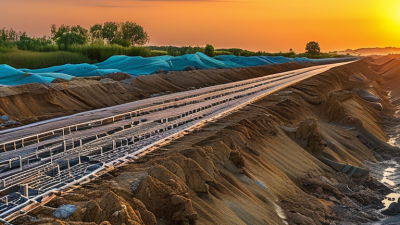
Why Choose PE Geomembrane for Your Project?

Why Choose PE Geomembrane for Your Project?

Choosing a liner is not a cosmetic decision. It affects leakage control, soil protection, maintenance costs, and project life. Pe Geomembrane is widely used in landfills, mining ponds, wastewater reservoirs, aquaculture facilities, and irrigation canals. Its low permeability creates a continuous barrier, while polyethylene offers practical resistance to moisture, many chemicals, and outdoor exposure.

Industry forecasts show steady demand. Grand View Research reported that the global geomembrane market was valued at approximately USD 2.1 billion in 2023, with continued growth expected through 2030. The International Geosynthetics Society also identifies geomembranes as important tools for containment and environmental protection. These figures are useful, but they do not replace site-specific engineering.

Small details matter.

Dr. Robert M. Koerner, a leading geosynthetics specialist, wrote, “The performance of a geosynthetic system depends on proper design, materials, and installation.” That principle remains practical. A strong polymer cannot compensate for poor seam welding, sharp subgrade, inadequate anchorage, or careless testing.

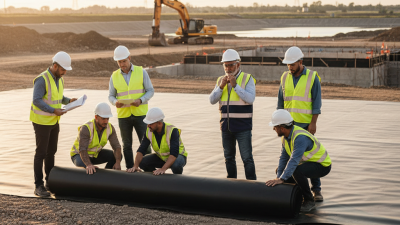
Field experience makes this clear. On a sunny afternoon, a dark liner can expand noticeably before installation. Wrinkles may later become stress points. A drainage layer may look clean but still damage the sheet if poorly graded. These risks are manageable, though not always eliminated. Project owners should review thickness, resin quality, seam testing, exposure conditions, and installer qualifications before selecting Pe Geomembrane. The material is not automatically the best choice. Correct design makes it dependable.

Sources: Grand View Research, Geomembrane Market Size Report, 2024; International Geosynthetics Society technical resources; Robert M. Koerner, Designing with Geosynthetics.
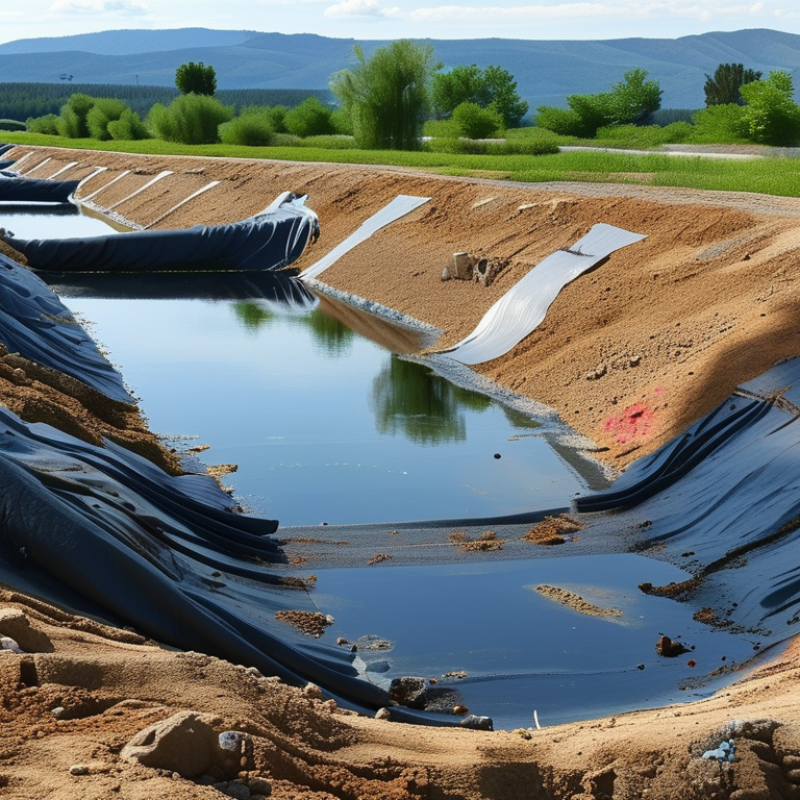
Why Choose PE Geomembrane for Your Project?

What Is PE Geomembrane and How Does It Work?

PE geomembrane is a synthetic liner made from polyethylene, a tough thermoplastic used for fluid containment. Its dense structure allows very little water, leachate, or chemical solution to pass through. Common formulations include HDPE for stiffness and LLDPE for greater flexibility. The right choice depends on ground movement, temperature, thickness, and expected exposure.

It works as a continuous barrier beneath or around the protected area. Sheets are placed over a smooth, compacted subgrade, then joined with heat welding. Properly welded seams can perform like the surrounding sheet. Field technicians should inspect overlaps, weld temperatures, and seam continuity.

Field checks matter. Vacuum testing, air-channel testing, or other approved methods can reveal weak points. A liner can still fail when installation overlooks sharp stones, trapped air, or poor drainage. That detail deserves attention.

Tips: Check the subgrade by hand and with documented measurements before laying the liner. Keep the material covered during storage, especially in strong sunlight. Plan panel layouts to reduce unnecessary seams. Avoid dragging sheets across rough ground. Leave enough slack for settlement, but avoid loose folds that collect water. Review weather conditions before welding. Even a good material needs careful installation and regular inspection to remain reliable.

Key Properties That Support Long-Term Project Performance

Why Choose PE Geomembrane for Your Project?

Key Properties That Support Long-Term Project Performance

Polyethylene geomembrane supports containment projects through low permeability, chemical resistance, and controlled manufacturing. On-site inspections often reveal small punctures near anchor trenches, not in open panels. That detail matters. A strong material still needs careful handling, clean subgrades, and tested seams.

The Geosynthetic Institute’s GRI GM13 specification sets demanding requirements for high-density polyethylene geomembranes. For a typical 1.5 mm sheet, the specification includes minimum tensile yield strength of about 22 kN/m and break strength near 30 kN/m. It also requires high elongation at break, commonly exceeding 700%. These values help the liner tolerate settlement and installation stress. They do not remove every risk.

Long-term performance also depends on environmental exposure. The U.S. Environmental Protection Agency’s RCRA Subtitle D guidance recognizes composite liner systems for municipal solid waste containment. In practice, designers often combine geomembranes with compacted clay or geosynthetic clay liners. Studies by Rowe and Sangam in Geotextiles and Geomembranes reported that properly stabilized polyethylene liners may provide service lives exceeding 100 years under moderate temperatures. However, elevated heat, oxidative damage, poor welding, and aggressive chemicals can shorten that period. That is the uncomfortable part. Material selection alone cannot guarantee durability. Seam testing, leak surveys, protective geotextiles, and documented installation records remain essential.

Why Choose PE Geomembrane for Your Project?

Typical hydraulic conductivity of intact barrier materials. Lower values indicate stronger resistance to water migration and support long-term containment performance.

PE geomembranes typically provide hydraulic conductivity near 10⁻¹³ cm/s when intact, substantially lower than common compacted clay liner and geosynthetic clay liner ranges. Their long-term performance also depends on thickness, seam quality, UV stabilization, chemical compatibility, installation control, and protection from puncture or mechanical damage. Values shown are representative engineering ranges and should be verified for the specific project design.

How PE Geomembrane Compares with Alternative Liner Materials

Why Choose PE Geomembrane for Your Project?

When comparing liner materials, polyethylene geomembrane offers a strong balance of containment, flexibility, and service life. The U.S. Environmental Protection Agency reports that nearly half of municipal solid waste was landfilled in 2018. Reliable barriers therefore matter beneath waste cells, ponds, and containment areas. A properly manufactured PE geomembrane can provide hydraulic conductivity near 1 × 10⁻¹³ cm/s, while compacted clay commonly targets about 1 × 10⁻⁷ cm/s. That difference can reduce seepage pathways by several orders of magnitude. The comparison is not perfect, though. Installation quality can defeat excellent laboratory performance.

Compared with clay liners, PE sheets require less thickness and avoid moisture-related cracking during dry periods. Compared with concrete, they tolerate ground settlement and resist many common chemicals. Flexible PVC can be easier to weld in some conditions, but plasticizer migration and long-term chemical compatibility require careful review. High-density PE generally provides higher stiffness, while linear low-density PE offers better flexibility around corners and uneven subgrades. The Geosynthetic Institute’s GRI GM13 specification identifies key controls, including carbon black content, tensile properties, stress-crack resistance, and oxidative stability. These checks support more consistent field performance.

A project team should still examine temperature, ultraviolet exposure, waste chemistry, and subgrade movement. ASTM test results are useful, but they do not replace seam testing and construction records. One overlooked wrinkle: punctures often occur during aggregate placement, not during factory production. Practical inspection matters. A liner chosen only by price may create expensive repairs later. EPA landfill guidance and GRI specifications both support combining material selection with drainage design, protective geotextiles, and documented quality assurance.

Selecting the Right PE Geomembrane for Site Conditions

Why Choose PE Geomembrane for Your Project?

Selecting the Right PE Geomembrane for Site Conditions

Choosing a PE geomembrane starts with the site, not the product catalogue. Soil type, liquid chemistry, temperature, and installation access all influence performance. Before ordering, inspect the subgrade for stones, roots, voids, and uneven compaction. A smooth surface reduces puncture risks. Small details matter.

For sharp or heavily trafficked areas, a thicker liner may provide better resistance to damage. High-density polyethylene offers strong tensile performance and chemical resistance. Linear low-density polyethylene provides greater flexibility where settlement or irregular contours are expected. If the site may move, flexibility deserves serious attention. Do not select thickness alone. A thicker liner is not automatically safer.

Liquid compatibility should be checked against current technical data, especially for acidic, alkaline, or oily contents. Temperature also affects welding and long-term behavior. Strong sunlight requires suitable ultraviolet resistance and careful storage before installation. Textured surfaces can improve slope stability, while smooth sheets may simplify cleaning and seam inspection. Experienced installers should control welding temperatures, record seam tests, and repair visible defects immediately. One common mistake is treating quality control as paperwork. It is part of the containment system. No selection is perfect, so project assumptions should be reviewed when weather, loading, or site conditions change.

Why Choose PE Geomembrane for Your Project? - Selecting the Right PE Geomembrane for Site Conditions

Site Condition or Project Requirement Recommended PE Geomembrane Selection Typical Thickness Range Relevant Performance Characteristics Key Design and Installation Considerations
Clean soil with low puncture risk
Examples include prepared ponds, reservoirs, and containment areas with smooth subgrades.
Standard smooth PE geomembrane, selected according to the required service life and liquid type. Approximately 0.75–1.50 mm Low permeability, good chemical resistance, flexibility, and effective containment performance. Remove sharp stones and organic debris; compact and grade the subgrade; use approved thermal welding procedures.
High puncture or mechanical stress
Areas with coarse aggregate, uneven ground, heavy equipment, or frequent maintenance traffic.
Thicker PE geomembrane, often combined with a protective geotextile cushion or drainage layer. Approximately 1.50–2.50 mm Higher puncture resistance, greater tear resistance, and improved dimensional stability. Use a site-specific protection design; avoid dragging equipment directly over the liner; inspect seams before covering.
Sloped embankments or sidewalls
Applications where panel movement and interface friction may affect stability.
Textured or structured-surface PE geomembrane where increased interface friction is required; smooth material may be used on flat areas. Approximately 1.50–2.00 mm Improved friction at soil or geosynthetic interfaces, strong weldability, and resistance to environmental stress cracking. Confirm interface shear parameters through testing or project data; provide suitable anchorage and control wrinkles.
Landfill or waste containment
Potential exposure to leachate, differential settlement, gases, and long-term loading.
High-quality polyethylene geomembrane engineered for long-term chemical exposure, usually supported by geosynthetic drainage and protection layers. Commonly 1.50–2.50 mm Strong chemical resistance, low permeability, resistance to stress cracking, and reliable seam performance. Design the complete liner system, including leak detection, drainage, gas management, subgrade support, and settlement allowances.
Agricultural ponds and irrigation reservoirs
Storage of freshwater or irrigation water under outdoor exposure.
UV-stabilized PE geomembrane with a thickness matched to subgrade quality and expected maintenance activity. Approximately 0.75–1.50 mm Weather resistance, low water permeability, flexibility, and suitability for outdoor installation. Provide an erosion-resistant slope surface; secure perimeter anchorage; minimize prolonged folding and mechanical damage.
Wastewater or industrial liquid containment
Exposure to acids, alkalis, salts, oils, or mixed process liquids.
PE geomembrane selected after reviewing the liquid composition, concentration, temperature, and exposure duration. Approximately 1.50–2.50 mm Broad chemical resistance and low hydraulic conductivity; actual compatibility depends on the specific chemical environment. Perform a chemical compatibility review; verify operating temperature and test welded seams under project conditions.
Cold climate or large seasonal temperature changes
Sites subject to freeze-thaw cycles, low installation temperatures, or thermal movement.
Flexible PE geomembrane with suitable low-temperature performance and adequate seam testing during installation. Approximately 1.00–2.00 mm Flexibility, resistance to environmental stress cracking, and tolerance of thermal expansion and contraction. Follow weather limitations for welding; allow appropriate slack; avoid installing over frozen or unstable subgrades.
High wind exposure during installation
Open sites where panels may lift, wrinkle, or shift before welding and anchoring.
PE geomembrane supplied in manageable rolls, with a planned anchorage and staged deployment procedure. Project-dependent; commonly 1.00–2.00 mm Good flexibility and weldability, allowing controlled panel placement and efficient seam fabrication. Use temporary ballast that cannot damage the liner; limit exposed panel area; weld and anchor progressively.
Project requiring long service life
Permanent or difficult-to-access containment facilities.
Thicker, UV-stabilized PE geomembrane with a complete protective and drainage system designed for the site. Approximately 1.50–2.50 mm Durability, low permeability, chemical resistance, UV resistance, and robust welded seams. Specify material properties using recognized geosynthetic standards; include quality control, seam testing, and periodic inspection plans.

Note: Thickness ranges are general planning values rather than final design specifications. Final selection should consider liquid chemistry, temperature, subgrade conditions, slope stability, loading, exposure, design life, and applicable project standards.

Installation Factors That Affect Protection and Service Life

Why Choose PE Geomembrane for Your Project?

Installation Factors That Affect Protection and Service Life

PE geomembrane can provide reliable containment, but installation quality controls much of its performance. The subgrade must be smooth, compacted, and free from stones, roots, and sharp debris. Even a small object can create concentrated stress beneath the liner. Drainage layers should be checked before placement. Water trapped underneath may cause uplift, wrinkles, or movement.

Weather also matters. High winds can shift panels, while extreme heat can increase thermal expansion. Installers should place temporary weights along exposed edges and avoid dragging sheets across rough ground. Seams require careful alignment and consistent welding temperature. A qualified technician should record weld settings and inspect every joint. Vacuum testing, air-pressure testing, or other suitable methods can reveal defects that visual checks miss.

Penetrations deserve extra attention. Pipes, anchors, and corners often create difficult transitions. Reinforcement patches should fit tightly, without forced folds or open gaps. I have seen projects lose valuable service life because small wrinkles were ignored near a pipe connection. That shortcut looked harmless at the time. It was not. Regular inspection during installation helps correct problems before covering the liner. Installation records, weather notes, weld logs, and test results also support dependable quality control. Field conditions rarely match drawings perfectly, so the installation plan may need thoughtful adjustment.