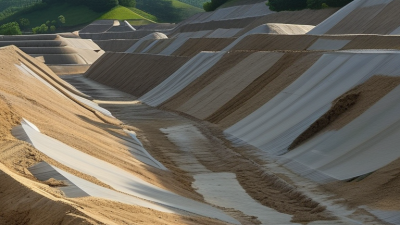
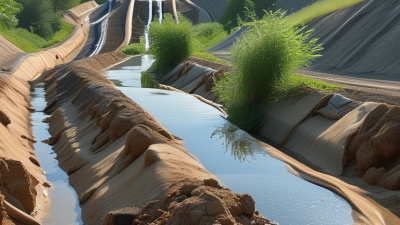
Choosing a reliable China Plastic Geonet manufacturer and supplier requires more than comparing prices. Performance depends on polymer quality, mesh structure, tensile strength, and production consistency. A geonet may look simple, yet small variations can affect drainage efficiency and long-term stability.
Experienced manufacturers usually begin with the project conditions. They review soil type, rainfall, slope angle, installation method, and expected loading. Their engineers can recommend suitable thickness, aperture size, roll width, and packaging. Practical details matter. A damaged roll can delay an entire construction section.
Quality control should cover raw materials, extrusion temperature, dimensional accuracy, and tensile testing. Reputable suppliers can provide inspection records, technical data sheets, samples, and clear production timelines. They should also explain how their Plastic Geonet performs in landfill drainage, road construction, erosion control, and retaining systems.
Factory experience matters.
However, no supplier should claim that one product fits every site. Specifications can be misunderstood, especially when drawings are incomplete or local conditions change. A dependable partner asks questions before issuing a quotation. That habit reflects professional responsibility.
Buyers should also examine export experience, communication quality, customization capability, and after-sales support. Certifications may support credibility, but documented test results and consistent batch performance are equally important. The strongest manufacturer is not always the cheapest one. It is the supplier that can turn technical requirements into stable, traceable production.
This guide introduces key considerations for selecting a China Plastic Geonet manufacturer and supplier. It focuses on product quality, engineering support, manufacturing reliability, and practical project value. Some decisions still require independent verification. That is worth remembering.
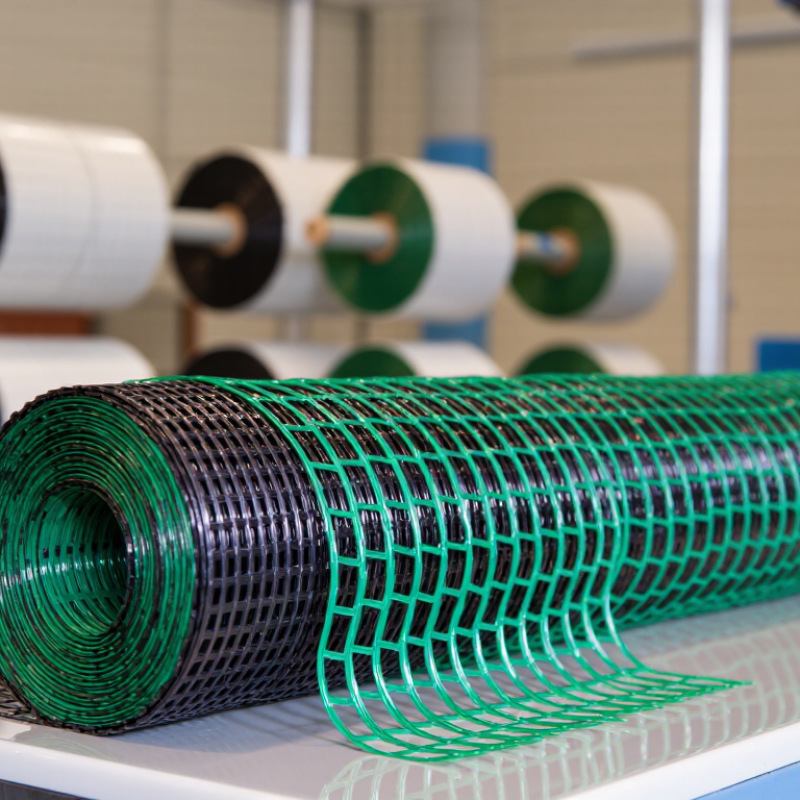
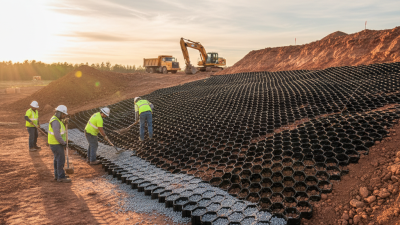
A plastic geonet is a three-dimensional drainage core made from intersecting polymer ribs. Its open structure creates continuous channels for water, gas, or leachate movement. Unlike a flat sheet, it preserves flow space under soil pressure. This makes it useful in landfill liners, retaining walls, road foundations, and waterproofing systems.
During installation, the geonet usually sits between protective geotextiles or beside a barrier layer. Water enters the connected openings and travels toward a collector pipe or outlet. The slope, load, rib thickness, and contact with nearby materials control its drainage performance. For example, wall backfill can produce heavy compression, so the selected core must resist collapse over time. Clean overlaps matter. Small installation errors can restrict flow.
Experienced project teams check design calculations, polymer quality, seam details, and site conditions before delivery. High-density polyethylene is common because it offers chemical resistance and stable performance. Still, no geonet solves every drainage problem. Fine soil can clog the openings if filtration is poorly designed. Uneven ground may also create unexpected pressure points. Testing under realistic load is wiser than relying only on catalogue values. A dependable supplier should provide traceable production records, technical data, and practical guidance for storage and placement. On site, simple inspections often reveal more than expected: damaged edges, folded rolls, or blocked outlets deserve immediate attention.
Plastic geonet is a three-dimensional drainage geosynthetic, commonly manufactured from high-density polyethylene (HDPE). Its intersecting ribs create continuous in-plane channels that collect and transport water, gas, or other fluids in landfill, road, tunnel, and foundation systems.
The chart shows representative nominal thicknesses commonly used for HDPE geonet drainage cores. In general, thicker geonets can provide greater drainage capacity under load, but actual performance also depends on normal stress, hydraulic gradient, slope, rib structure, and installation conditions.
Plastic geonets are three-dimensional drainage products used beneath roads, landfills, retaining walls, and green roofs. Their open ribs create continuous channels for water or gas movement. Common types include biplanar, triplanar, and composite geonets. Biplanar structures use two intersecting rib layers, while triplanar designs add a central drainage layer for higher flow capacity.
High-density polyethylene is the dominant material because it resists moisture, chemicals, and soil pressure. Polypropylene is also used where lower density and improved temperature performance are useful. According to Grand View Research, the global geosynthetics market reached about USD 14.1 billion in 2023, reflecting wider demand for engineered drainage and soil-separation systems. Geonets represent only one segment.
A reliable geonet normally has consistent rib spacing, strong junctions, and stable thickness under compression. Its performance depends on normal load, hydraulic gradient, filtration compatibility, and installation quality. ASTM D4716 is commonly used to evaluate transmissivity under pressure. Some project reports show substantial flow reduction after soil loading, often exceeding 50 percent compared with unconfined testing. That difference is easy to underestimate. Laboratory results cannot fully reproduce wrinkling, clogging, or uneven field placement. Manufacturers should therefore verify polymer quality, junction strength, long-term creep, and site-specific drainage capacity before recommending a structure.
Plastic Geonet Manufacturing Process and Quality Standards
Plastic geonet production starts with controlled polymer feeding. High-density polyethylene or polypropylene pellets are dried, blended, and heated through an extruder. A precision die forms intersecting ribs and drainage openings. Cooling rollers stabilize the sheet before stretching and winding. This process looks simple, but temperature variation can distort the aperture pattern.
The 2024 Plastics—The Facts report recorded global plastics production at about 413.8 million tonnes in 2023. That scale increases pressure for consistent resin selection and process control. Recycled content may reduce environmental impact, but it can also change tensile behavior. Each batch therefore needs traceable records, melt-flow checks, and contamination screening. Small defects matter.
Quality testing should cover mass per unit area, thickness, tensile strength, junction strength, and dimensional stability. ISO 10319 provides a recognized wide-width tensile method for geosynthetic products. ISO 10318-1 defines key geosynthetic terminology, supporting clearer technical communication. Drainage performance also requires flow testing under realistic normal pressure, not only laboratory-free conditions. Some production teams still focus heavily on appearance. That is not enough. Field loading, temperature cycling, and long-term oxidation can expose weaknesses missed during final inspection. Independent sampling, calibrated instruments, and retained specimens make supplier claims more reliable.
| No. | Manufacturing Stage | Main Process and Equipment | Key Quality-Control Items | Typical Control Range or Requirement | Relevant Test Method or Standard |
|---|---|---|---|---|---|
| 1 | Raw Material Preparation | Selection of polyethylene or polypropylene resin; drying, blending, and gravimetric dosing before extrusion. | Resin identification, contamination, moisture, melt-flow consistency, and additive dispersion. | Material grade and formulation must comply with the approved product specification. Moisture and contamination should remain within the resin supplier’s limits. | ASTM D1238 for melt-flow rate; ASTM D1505 or ISO 1183 for density, where specified. |
| 2 | Extrusion | Melting and homogenizing polymer pellets in an extruder, followed by controlled discharge through a die. | Melt temperature, extrusion pressure, output rate, die stability, and polymer uniformity. | Process settings are controlled according to resin type and approved production parameters; no visible unmelted particles or burn marks are permitted. | Documented process-control procedures under an ISO 9001 quality-management system. |
| 3 | Grid or Rib Formation | Formation of longitudinal and transverse polymer ribs by profile extrusion, die shaping, or controlled forming. | Rib height, rib width, aperture geometry, node integrity, and dimensional uniformity. | Dimensions and tolerances must meet the approved technical data sheet; apertures should remain open and free from blocked passages. | Dimensional inspection using calibrated gauges, vernier instruments, optical measurement, or equivalent documented methods. |
| 4 | Cooling and Calibration | Controlled air or water cooling, calibration, and stabilization of the extruded geonet structure. | Thickness, flatness, rib alignment, shrinkage, and surface defects. | Thickness and profile variation must remain within the approved product tolerance; excessive warping, tearing, and surface cracking are unacceptable. | ASTM D5199 for measuring the nominal thickness of geosynthetics, where applicable. |
| 5 | Surface Treatment or Lamination | Optional thermal bonding or lamination with a geotextile filter layer for composite drainage products. | Bond strength, coverage, delamination, seam condition, and filter-layer uniformity. | The bonded layer must remain continuous and securely attached without excessive adhesive blockage or open delamination. | ASTM D7005 for peel or shear resistance of a geosynthetic seam or joint, when applicable; project specifications may also apply. |
| 6 | Winding and Roll Formation | Continuous winding onto cores with controlled tension and automatic length measurement. | Roll length, width, edge condition, winding tension, telescoping, and visible damage. | Rolls should be tight, stable, and free from excessive telescoping, crushed edges, folds, and contamination. | Internal inspection procedures using calibrated length, width, and visual-inspection equipment. |
| 7 | In-Process Inspection | Sampling during production at defined intervals for dimensional and appearance checks. | Mass per unit area, width, thickness, aperture size, rib geometry, and visual uniformity. | Acceptance criteria must be defined in the inspection plan and matched to the product data sheet and project requirements. | ASTM D5261 for mass per unit area; ASTM D5199 for thickness; documented dimensional inspection methods. |
| 8 | Mechanical Performance Testing | Laboratory testing of tensile behavior, puncture resistance, creep, and structural stability as required by application. | Tensile strength, elongation, puncture resistance, compressive behavior, and long-term performance. | Values vary by product design and application; results must meet the declared technical specification and project design requirements. | ASTM D4632 or ISO 10319 for tensile properties of geosynthetics; ASTM D4833 for puncture resistance, where applicable. |
| 9 | Hydraulic Performance Testing | Measurement of in-plane flow capacity under specified normal pressure and hydraulic gradients. | Transmissivity, flow rate, compressive reduction, and clogging resistance for composite products. | The declared flow capacity must be evaluated at the specified normal stress, hydraulic gradient, and test direction. | ASTM D4716 for in-plane flow rate per unit width and transmissivity of geosynthetic drainage products. |
| 10 | Environmental Durability Evaluation | Assessment of resistance to ultraviolet exposure, oxidation, chemical contact, and temperature-related aging when required. | Retained tensile properties, oxidation resistance, UV stability, and chemical compatibility. | Performance requirements depend on installation conditions, exposure period, polymer type, and project design life. | ASTM D4355 for accelerated UV exposure of geotextiles; EN 13252 for drainage and filtration geotextile-related applications, where applicable. |
| 11 | Final Inspection and Release | Review of test results, visual inspection, roll identification, packaging, and release documentation. | Traceability, batch records, certificate of analysis, nonconformance status, and packaging condition. | Each roll should have identifiable production information, product description, dimensions, net weight, and handling instructions. | ISO 9001 documented-information and traceability practices; customer inspection and testing plans may supplement these requirements. |
| 12 | Packaging and Storage | Wrapping, labeling, palletizing, and storage on level ground away from prolonged sunlight, heat, chemicals, and mechanical damage. | Moisture protection, UV protection, roll stability, label legibility, and loading security. | Products should remain protected from ultraviolet radiation and physical damage until installation; rolls should not be dragged or stacked in an unstable manner. | Project specifications, manufacturer handling instructions, and applicable geosynthetic installation guidance. |
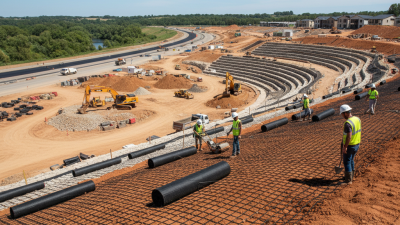
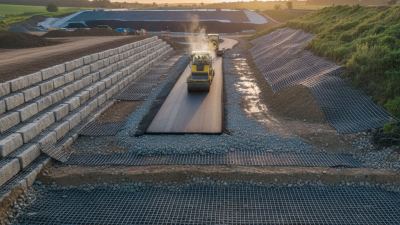
Plastic geonets support drainage, filtration, and soil reinforcement in civil engineering projects. Their open, ribbed structure creates continuous flow paths beneath roads, retaining walls, and landfill liners. In highway construction, a geonet can reduce water pressure inside pavement layers. This helps limit frost damage, rutting, and uneven settlement. In retaining systems, it guides seepage toward collection pipes. Lightweight rolls also reduce transport effort and installation time.
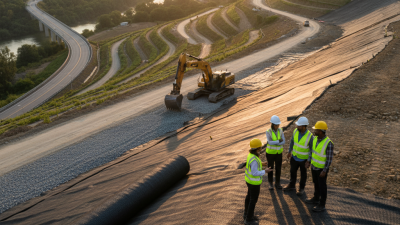
Performance depends on more than polymer strength. Engineers should check tensile properties, transmissivity, creep resistance, and chemical compatibility. Site conditions matter. Sharp stones, poor overlaps, or compressed drainage channels can reduce effectiveness. A common mistake is selecting a product from catalog values alone. Field inspection should confirm contact, slope, seams, and outlet protection. Laboratory data remains useful, but actual placement can be less perfect. That deserves honest review.
Tips: Match the geonet to the expected water flow and soil pressure. Keep drainage paths clean during installation. Protect exposed rolls from prolonged sunlight and damage. Use approved geotextile separators when fine soil may clog the structure. Record installation checks with photographs and test results. A small design review can prevent costly repairs.
China Top Plastic Geonet Manufacturer and Supplier
Selecting a reliable plastic geonet manufacturer requires more than comparing prices. Start with the project conditions. Soil type, drainage demand, load pressure, temperature, and exposure time all affect product selection. Ask for clear specifications, including polymer type, aperture size, thickness, tensile strength, and unit weight. A professional supplier should explain these details in practical terms, not only send a colorful catalog.
Request recent test reports and production samples. Check whether the sample matches the quoted specification. Look for batch records, quality inspection procedures, and traceable raw materials. A dependable factory should also discuss extrusion control, welding quality, UV resistance, and packaging protection. Visit the facility if possible, or arrange a video inspection. Communication matters. Delayed replies may become delayed shipments. However, quick replies do not prove technical ability. I learned that the hard way.
Tips: Compare at least three suppliers. Ask for a small trial order. Confirm production lead time, loading method, export documents, and after-sales support in writing. Review the warranty carefully. Avoid choosing the lowest quotation without understanding the material grade. Some suppliers may offer excellent samples but weaker mass production. This risk deserves attention. Check independent test results when the project has strict engineering requirements. A reliable plastic geonet supplier should welcome reasonable questions, admit product limitations, and suggest a suitable design rather than promise everything.